Custom Oversized Shirts, Fit and Fabric Explained
An oversized shirt is not just a larger size of a regular tee. The whole shape is different, and that difference is the reason people seek it out.
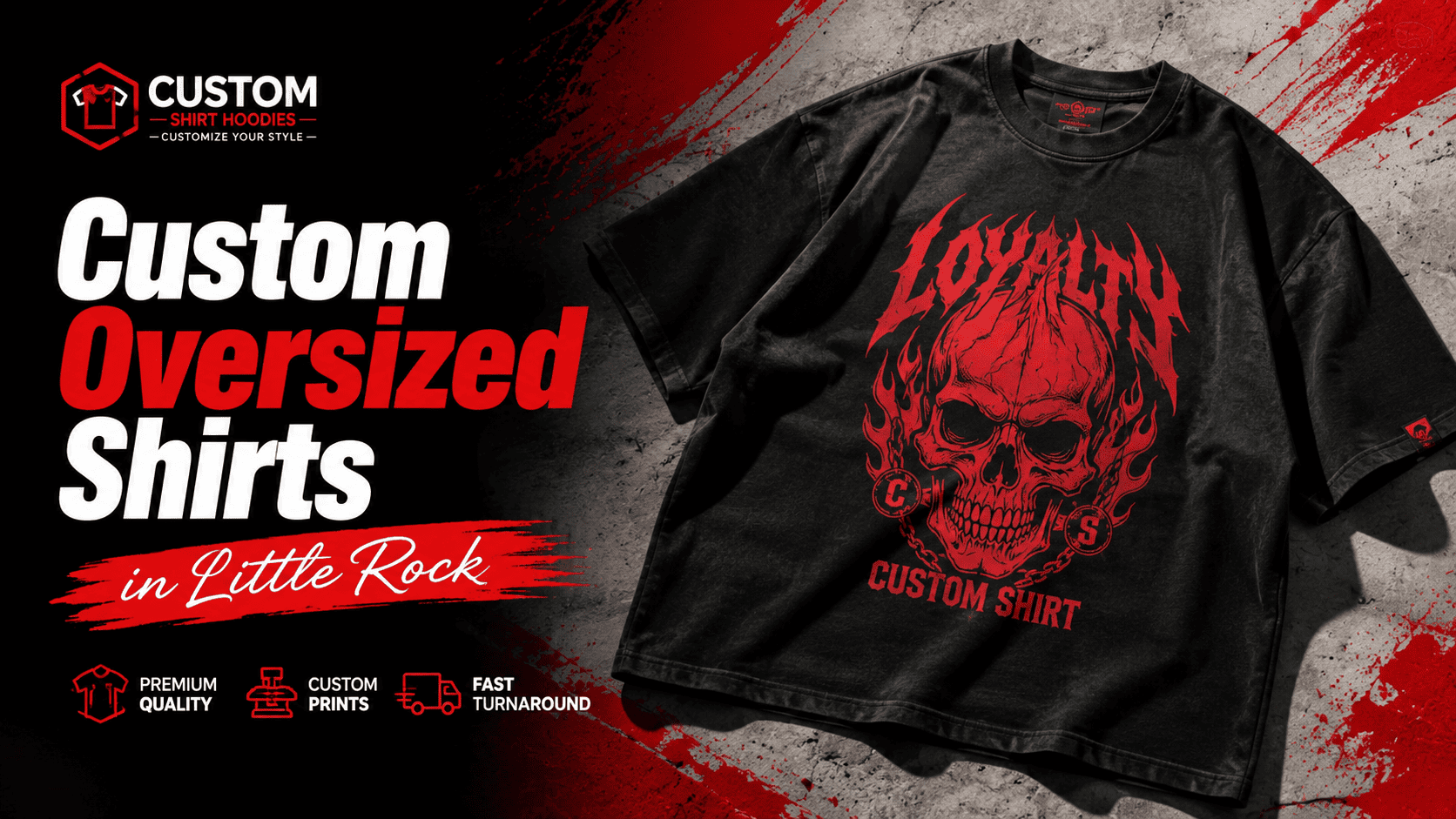
An oversized shirt has a wider body, a dropped shoulder seam, and a boxy cut that sits away from the frame instead of hugging it. Order a size up in a standard tee and you get a long, baggy shirt that still has the seams in the wrong place. A true oversized fit is built that way from the pattern, not stretched into it. That is why the fabric, the seam placement, and the print all behave differently.
This covers what actually makes a shirt oversized, how the fit is constructed, which fabric holds the shape, and where a design should sit on a boxy cut.
Quick Answer
Custom oversized shirts use a dropped shoulder seam and a boxy body cut from the pattern, not a sized-up regular tee. Heavier fabric holds the shape, and print placement shifts to suit the wider chest and lower shoulder line. Custom Shirt Hoodies prints them in-house near Park Plaza, so you can check the fit and the print before you commit.
What Makes a Shirt Oversized Rather Than Just Large
The difference comes down to the pattern, not the size tag.
A regular shirt scaled up gets longer and wider in equal measure, but the shoulder seam still lands near the edge of your shoulder. An oversized cut moves that seam down the arm on purpose, which is what gives the fit its relaxed, boxy look. The body is cut wider and shorter in proportion, so the shirt sits square rather than long and draped.
Sizing works differently too. An oversized medium is not the same as a regular large. It is a medium built to wear loose, which is why an oversized t-shirt size guide reads differently from a standard size chart. Picking the right size for an oversized fit means thinking about how loose you want it, not just your usual measurement.
Drop Shoulder Construction Explained
The dropped shoulder is the single feature that defines the oversized fit.
On a regular fit, the seam where the sleeve meets the body sits at the top of your shoulder. On a drop shoulder, that seam falls partway down your upper arm. The sleeve starts lower, the body opens up, and the whole shirt reads relaxed instead of fitted.
This is a real construction choice, not an accident of sizing. A breakdown of drop shoulder vs raglan vs regular fit shows how the seam placement changes the entire silhouette. For custom drop shoulder shirts, the lower seam also changes where a design can go, since the shoulder area is no longer where you think it is.
Anyone ordering one of these for the first time should know this before choosing placement. A logo positioned for a regular shoulder line will sit wrong on a drop shoulder cut.
Fabric Weight Holds the Oversized Shape
Fabric weight matters more on an oversized shirt than on a fitted one.
A lightweight blank on an oversized pattern hangs limp. It clings in the wrong spots and loses the structured, boxy look that makes the fit work. Heavier fabric holds the shape, drapes cleanly off the dropped shoulder, and gives the shirt the substantial feel people want from an oversized cut.
Fabric weight is measured in GSM, or grams per square meter. A standard tee runs light. An oversized shirt built for structure runs heavier, closer to the weight you would feel in custom hoodies than in a thin summer tee.
The trade-off is warmth and price. Heavier fabric costs more per blank and wears warmer, which suits cooler months and streetwear styling more than a July afternoon. When you order an oversized shirt, the fabric weight is worth deciding early, because it changes both the look and the feel.
Where a Design Sits on an Oversized Fit
Print placement changes on a boxy cut, and getting it wrong is the most common mistake.
The wider body and lower shoulder mean a design centered for a regular tee lands too high and too small on an oversized cut. The chest area is broader, so a small logo can look lost. A larger, lower-set design usually reads better on the roomier front panel.
Back prints have more space to work with on an oversized cut, which is why streetwear designs often run large across the back. A t-shirt design placement guide covers standard measurements, though an oversized fit shifts them down and out from the regular numbers.
For a boxy fit, the safe approach is to size the artwork to the actual garment rather than a standard template. Seeing the design on the real blank before printing removes the guesswork entirely.
Print Methods for an Oversized Fit
The heavier fabric on an oversized shirt takes print well, and the method depends on the order.
Screen printing suits larger runs. The screen printing setup cost is fixed, so the per-shirt price drops as quantity climbs. For a streetwear drop or a group order, it is the most cost-effective route and gives a thick, durable print that stands up to the heavier blank.
DTG suits single pieces and detailed designs. With DTG printing, there is no minimum and no per-color charge, so one oversized shirt with a full-color graphic is a normal order. To weigh the two against each other for your specific design, the best printing method for t-shirts breakdown lays out the trade-offs.
Both methods run on the same heavyweight blanks used for these shirts, so the choice comes down to quantity and design detail rather than the garment itself.
Sizing an Oversized Shirt for a Group Order
Ordering an oversized fit for a group brings a sizing wrinkle that regular tees do not.
Because an oversized fit is already loose, a person’s usual size may not be the size they want. Some people prefer their true size worn baggy, others size down to keep the drop subtle. For a streetwear brand or a group drop, deciding on a house sizing standard up front keeps the run consistent.
A single oversized shirt is a normal order, and so is a full run. For team drops, brand launches, and group orders, bulk orders bring the per-piece cost down as the quantity grows. The heavier fabric costs more than a standard blank, so bulk pricing matters more on these than on light tees.
If every piece in the run carries a different name or number, that changes which print method fits. It is worth flagging at the counter before the order starts.
Getting the Fit Right Before You Order
The best way to avoid an oversized shirt that does not fit the way you pictured is to check it in person.
Fabric weight, seam placement, and body width are obvious in hand and invisible in a photo. A blank that looks perfectly boxy online can arrive lighter or shorter than expected. Trying the actual size settles the question a size chart cannot.
Ordering from a local shop puts that check in the room with you. You feel the fabric, see the drop shoulder on your own frame, and approve the print placement on the real garment before anything gets printed. For the full range of fits beyond oversized, custom t-shirts in Little Rock covers regular and fitted cuts alongside the boxy ones.
Ordering Custom Oversized Shirts in Little Rock
Custom oversized shirts come down to three things done right: a true drop shoulder pattern, a fabric heavy enough to hold the shape, and a print sized for a boxy cut rather than a regular tee. Miss any one and the shirt reads like a baggy large instead of a proper oversized fit.
Getting all three right is easier in person than online, because the fit and fabric are things you have to feel rather than picture. A local shop lets you check the blank, confirm the placement, and see the finished shirt before you pay for the run.
Custom Shirt Hoodies prints custom oversized shirts in-house near Park Plaza, serving Little Rock, North Little Rock, and the surrounding cities. Walk in during business hours to check the fit, or contact the team to plan a streetwear drop or a group order.
Frequently Asked Questions
What are custom oversized shirts?
Custom oversized shirts are printed shirts cut from an oversized pattern with a dropped shoulder seam and a wider, boxy body. They are built to wear loose, unlike a regular tee ordered a size up, which stays baggy but keeps the seams in a fitted position.
What is the difference between an oversized shirt and a drop shoulder shirt?
A drop shoulder is a construction feature where the sleeve seam sits partway down the arm instead of at the shoulder. An oversized shirt uses that dropped seam along with a wider body, so nearly all oversized shirts are drop shoulder shirts, but the terms describe different parts of the same fit.
What fabric weight is best for a custom oversized shirt?
A heavier fabric holds the boxy shape and drapes cleanly off the dropped shoulder. Lightweight blanks hang limp on an oversized pattern. Heavier fabric costs more and wears warmer, so it suits streetwear styling and cooler months.
Can I order one custom oversized shirt, or does it need to be bulk?
One oversized shirt is a normal order. DTG printing has no minimum, so a single piece with a full-color design is handled the same way as a group run. Ordering more lowers the per-shirt cost.
Where can I buy custom oversized shirts in Little Rock?
Custom Shirt Hoodies near Park Plaza prints them in-house, serving Little Rock, North Little Rock, and the surrounding cities. You can check the fit and fabric in person and approve the print placement before it goes to press.