Custom Heavyweight Hoodies for Winter in Little Rock, AR
Winter in Arkansas doesn’t last long, but it shows up hard enough that a thin hoodie won’t cut it. Anyone who has waited at a bus stop in January or worked an outdoor shift in December knows the difference between a hoodie that just looks warm and one that actually holds up against wind and cold. That difference usually comes down to fabric weight.
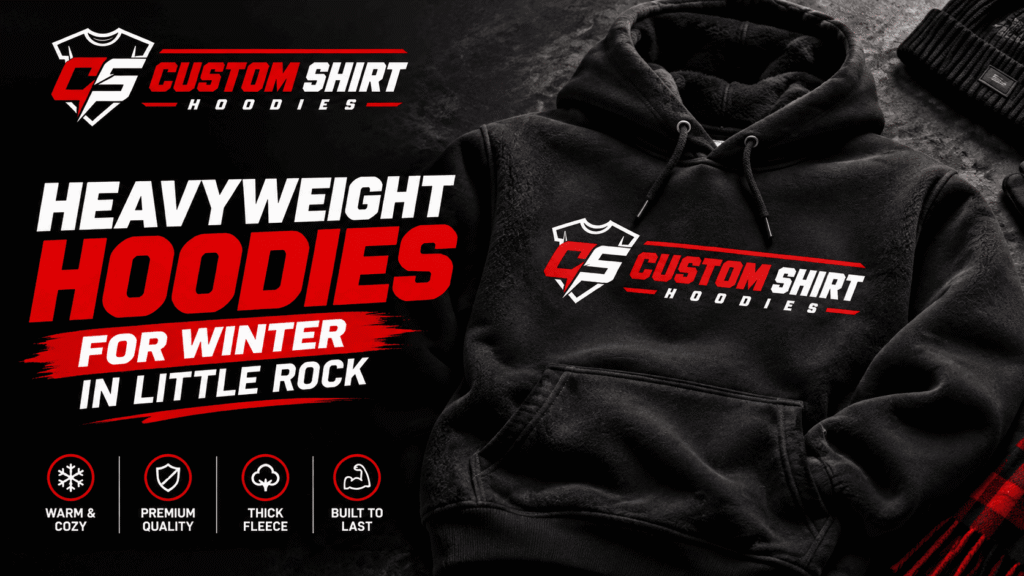
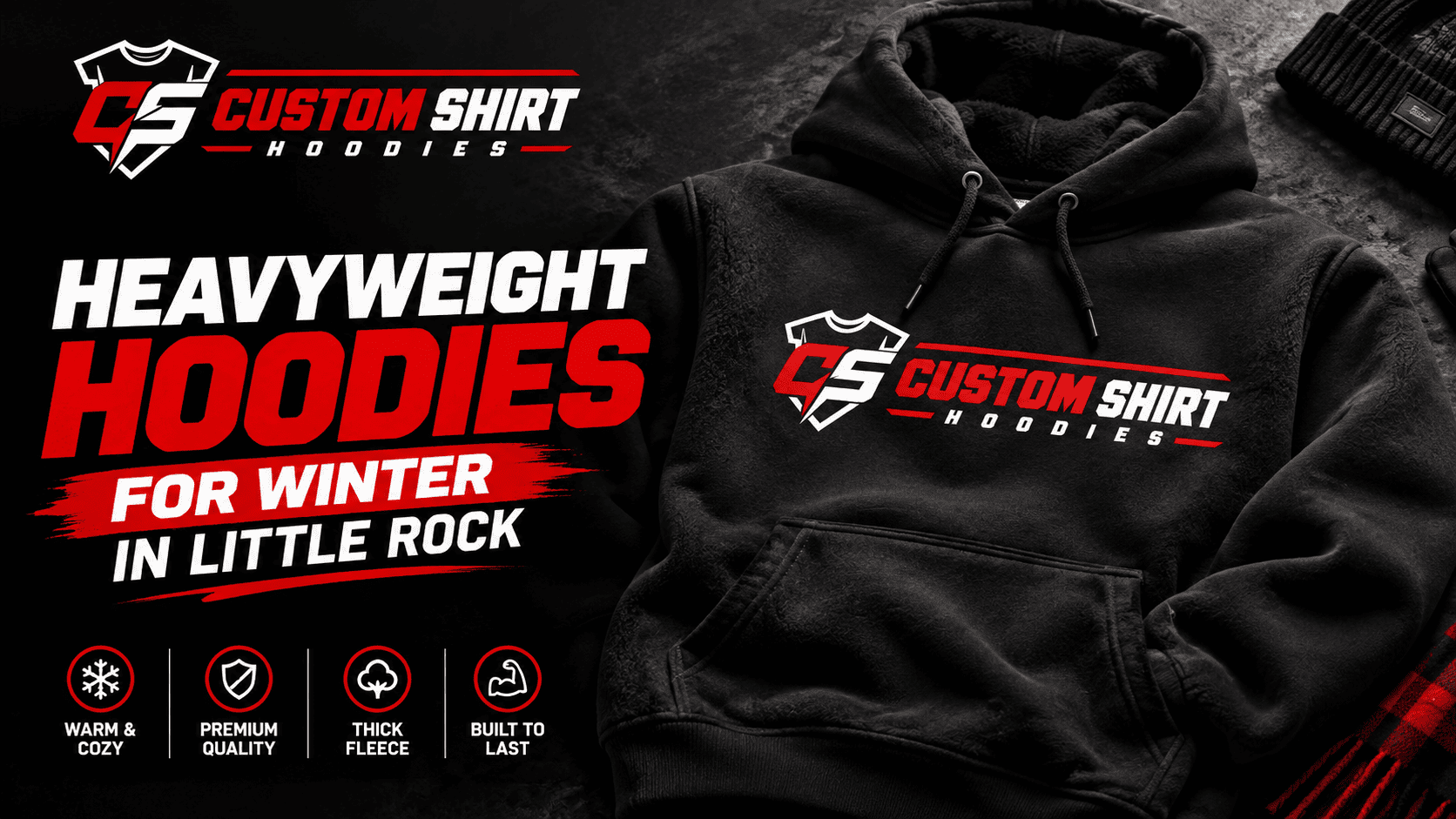
Custom heavyweight hoodies for winter are built from thicker, denser fleece than the standard hoodie you’d grab off a shelf. They’re the ones people reach for when the temperature actually matters, not just the design on the front. For businesses, schools, churches, and families across Little Rock and North Little Rock, heavyweight hoodies also happen to be one of the better options for custom hoodie printing because the thicker material holds up to repeated wear, washing, and decoration far better than lighter blends.
What Actually Makes a Heavyweight Hoodies for Winter
The term gets thrown around loosely, so it helps to know what it actually means. A hoodie is generally categorized by how much its fabric weighs per square meter, measured in GSM, or grams per square meter. Lightweight hoodies usually sit under 250 GSM. Midweight runs somewhere between 250 and 320. Heavyweight starts around 350 GSM and can climb higher depending on the mill and the blend.
That GSM number isn’t just a spec sheet detail. It’s a rough way of predicting how the hoodie will feel, how it will wear over time, and how warm it’ll actually keep you. GSM is part of a broader system of units of textile measurement used across the apparel industry to standardize fabric weight so buyers know what they’re actually ordering, regardless of brand or supplier.
Heavier fabric traps more air between fibers, which is where the insulation comes from. It also tends to hold its shape after washing and resists pilling longer than thinner materials. That’s part of why heavy cotton hoodies and heavyweight fleece blends show up so often in bulk orders for teams, churches, and companies that need apparel to survive a full season of wear, not just a few outings.
Does Little Rock Actually Get Cold Enough to Need This
Fair question, since Arkansas isn’t exactly known for brutal winters. But the climate in Little Rock does dip into the 20s and 30s on a regular basis during December and January, and ice storms aren’t unheard of. According to the National Weather Service’s Little Rock office, the region sees a mix of cold snaps, occasional freezing rain, and wind chill that can make a mild-looking day feel a lot rougher outside.
That’s the range where a heavyweight hoodie earns its place. It won’t replace a winter coat on the coldest mornings, but layered under a jacket, or worn on its own during a brisk but not freezing day, it does real work. For outdoor events, morning shifts, or anyone standing around a field or parking lot for a few hours, the extra fabric weight makes a noticeable difference. The CDC’s guidance on cold stress also points out that layering with warmer base materials is one of the simplest ways to reduce cold-related risk for anyone working outside for extended periods, which is exactly the situation a lot of local businesses and outdoor crews deal with each winter.
Heavyweight vs. Midweight: Where the Line Actually Matters
Midweight hoodies aren’t a bad choice. They’re comfortable for indoor wear, mild fall afternoons, or layering under a coat when it’s not especially cold. But they don’t hold heat the same way, and they tend to feel thinner against wind.
Heavyweight fleece hoodies use denser fabric that traps more warmth and holds its structure through more washes. If you’re deciding between the two for a winter order, the honest answer is that midweight works fine for casual, mild-weather use, while heavyweight is the better call for anyone who’ll actually be outside in real winter conditions, or for organizations that want apparel that looks and feels the same after a full season of use.
Custom Printing and Embroidery on Heavyweight Hoodies
One thing that surprises people is that thicker fabric actually performs better with most decoration methods, not worse. The added surface and structure give screen printing more grip, and it’s part of why heavyweight material pairs so well with screen printing for large logo runs or bold designs that need to stay sharp wash after wash.
Embroidery also holds up better on heavier fabric, since the denser weave gives stitching something solid to anchor into instead of pulling or puckering the way it can on thin material. That’s a big part of why heavyweight hoodies show up so often in custom church hoodies orders, youth group apparel, and staff uniforms where the logo needs to survive years of wear, not just a season.
For designs with more detail or texture, DTF printing and DTG printing both work well on heavyweight blends too, especially for smaller runs or designs with a lot of color that wouldn’t translate as cleanly through a screen. The choice usually comes down to order size, design complexity, and how the hoodie will be worn day to day.
Bulk and Wholesale Orders for Winter
Heavyweight hoodies come up constantly in bulk conversations, and for good reason. Teams, schools, churches, and businesses ordering custom sweatshirts or custom hoodies for the winter season want something that’ll actually hold up through the months it gets worn, not just look good in a group photo on day one.
Bulk orders on heavyweight material tend to make sense for organizations planning ahead for the whole winter, since the fabric’s durability means fewer replacements and complaints down the line. Wholesale heavyweight hoodies also give more consistent sizing across a group, which matters when you’re outfitting a staff, a youth ministry, or an entire sports team and need everyone in matching gear that fits the same way.
Fabric Blends and What They Actually Change
Most heavyweight hoodies use a cotton-polyester blend rather than pure cotton. The ratio changes the feel more than people expect. A higher cotton percentage feels softer against the skin and breathes a little better, while more polyester in the mix adds shape retention, resists pilling, and holds color a bit longer through repeated washing.
Neither blend is objectively better. It comes down to what the hoodie’s actually for. A hoodie meant for daily wear around town might lean toward more cotton for comfort, while a hoodie built for outdoor events, work sites, or heavy seasonal use often does better with a blend that resists wear and keeps its shape through more washes.
Caring for a Heavyweight Hoodie
Heavier fabric doesn’t mean indestructible. Some shrinkage is normal after the first wash, typically a small percentage, especially with cotton-heavy blends. Washing in cold water and skipping high heat in the dryer goes a long way toward keeping the fit close to what it was on day one. It also helps preserve whatever printing or embroidery is on it, since heat and repeated high-temperature drying are usually what wear down a design faster than the fabric itself.
Getting Heavyweight Hoodies Made Locally
Ordering locally means you can actually see and feel the fabric before committing to a bulk run, which matters more than people realize until they’ve dealt with a supplier that shipped something thinner than expected. Working with a shop near Park Plaza Shopping Center in Little Rock also means shorter turnaround times and the ability to approve a design in person before it goes into full production.
Frequently Asked Questions
What makes a hoodie “heavyweight”?
Heavyweight hoodies are made from thicker fleece or French terry fabric, generally 350 GSM or higher. The extra weight of fabric gives added warmth, a beefier hand feel, and greater durability over repeated washings and wearings.
Are heavyweight hoodies warm enough for Little Rock winters?
Yes. Little Rock winters are short but can bring temperatures in the 20s and 30s, along with wind and occasional ice. A heavyweight hoodie holds up well in that range, especially layered under a jacket on the coldest days.
What’s the difference between heavyweight and midweight hoodies?
Midweight hoodies are generally 250 to 320 GSM, and are good for mild fall days or to wear inside. Heavyweight hoodies are made with a denser fabric that helps trap more heat and retain the shape of the hoodie better, making them a better option for actual cold weather.
Can heavyweight hoodies be custom printed or embroidered?
yes The thicker fabric actually does a better job holding screen printing, embroidery and puff print than thinner material, because there is more surface and structure for the design to sit on.
What’s the minimum order for custom heavyweight hoodies?
Minimums vary with supplier and method of decoration. Screen printing is generally suited for smaller runs. Embroidery and specialty finishes may require a little larger run to achieve reasonable per-unit costs.
How long does it take to get custom heavyweight hoodies made in Little Rock?
Turnaround is order size and type of decoration dependent, but most local orders are completed in one to two weeks from artwork approval to pickup or delivery.
Do heavyweight hoodies shrink after washing?
Some shrinking is normal , especially with cotton blends , usually a few percent after the first wash . Wash in cold water and do not use high heat in the dryer to help the hoodie retain the original fit for longer.
What fabric blend works best for heavyweight winter hoodies?
A common blend is cotton-polyester, as it provides a balance of warmth, softness and durability. The more cotton, the softer it feels against your skin; the more polyester, the more shape it retains and the more resistant it is to pilling.