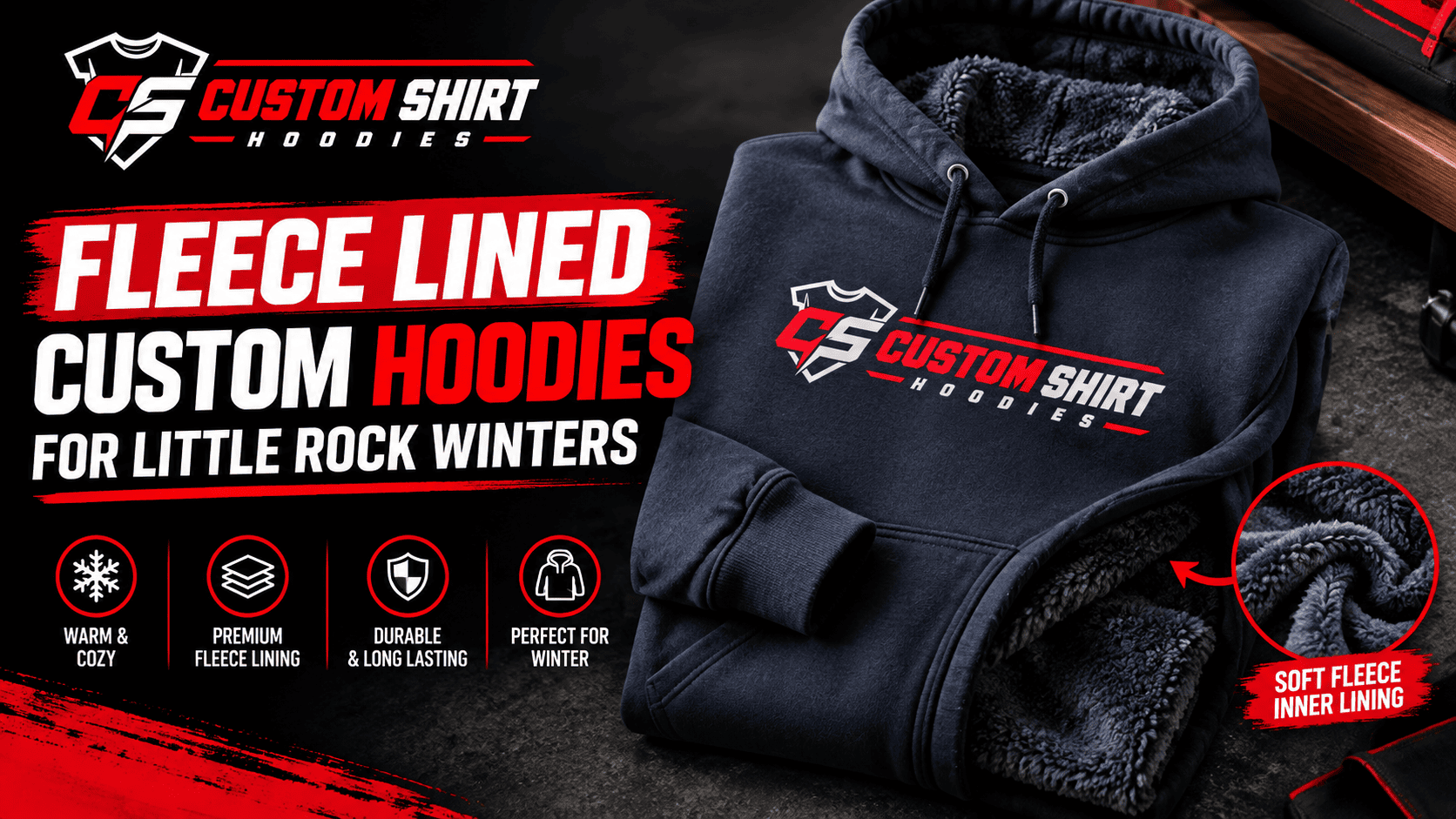
Fleece Lined Custom Hoodies for Little Rock Winters
Not every winter jacket makes sense for daily wear, and not every hoodie holds up when the temperature actually drops. Fleece lined custom hoodies sit in the middle of that gap. They keep the shape and comfort of a regular hoodie but add a soft inner layer that changes how the garment feels once the weather turns.
For people in Little Rock and North Little Rock ordering apparel for the colder months, that inner layer is often the detail that decides whether a hoodie gets worn all winter or gets pushed to the back of a drawer after a few cold mornings. This article walks through what fleece lining actually is, how it compares to other winter options, and what to expect when ordering custom hoodies with fleece lining locally.
What Fleece Lining Actually Is
Fleece, in the textile sense, refers to a soft, brushed fabric usually made from cotton, polyester, or a blend of both. According to the general overview of fleece as a textile, the fabric gets its texture from a brushing process that raises the fibers, which traps air and creates insulation without adding much weight.
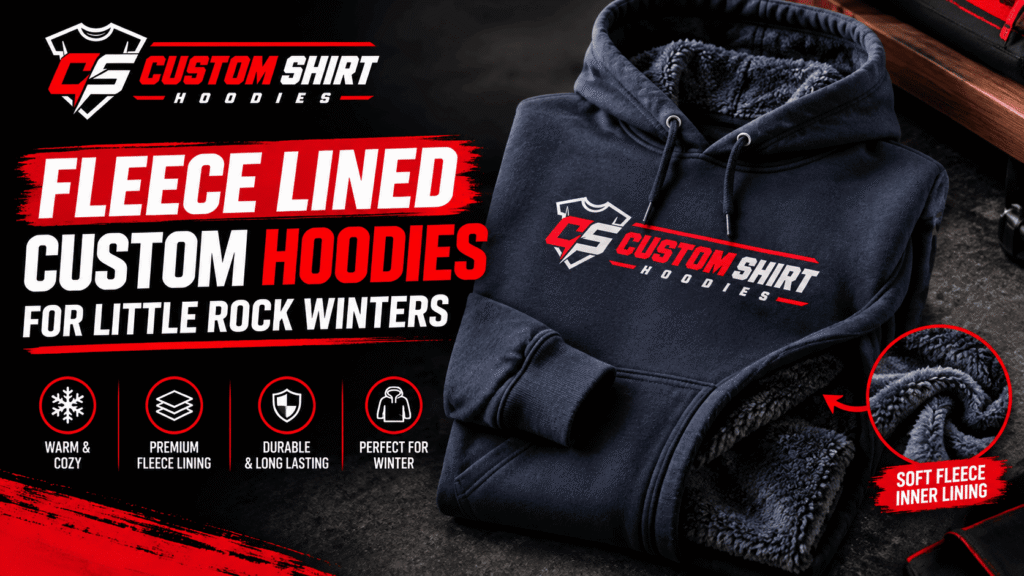
In a fleece lined hoodie, this soft fabric is sewn into the inside of the garment, usually across the body and sometimes the hood as well. The outer shell stays smooth, which is what allows the hoodie to still take printing or embroidery cleanly. The hoodie itself, as a garment style, traces back to sweatshirt design, and Britannica’s overview of the sweatshirt covers how the category evolved from simple athletic wear into the everyday layering piece it is today, hoods and pockets included.
Fleece Lined vs. Heavyweight Hoodies
People sometimes mix these two up, so it’s worth separating them clearly.
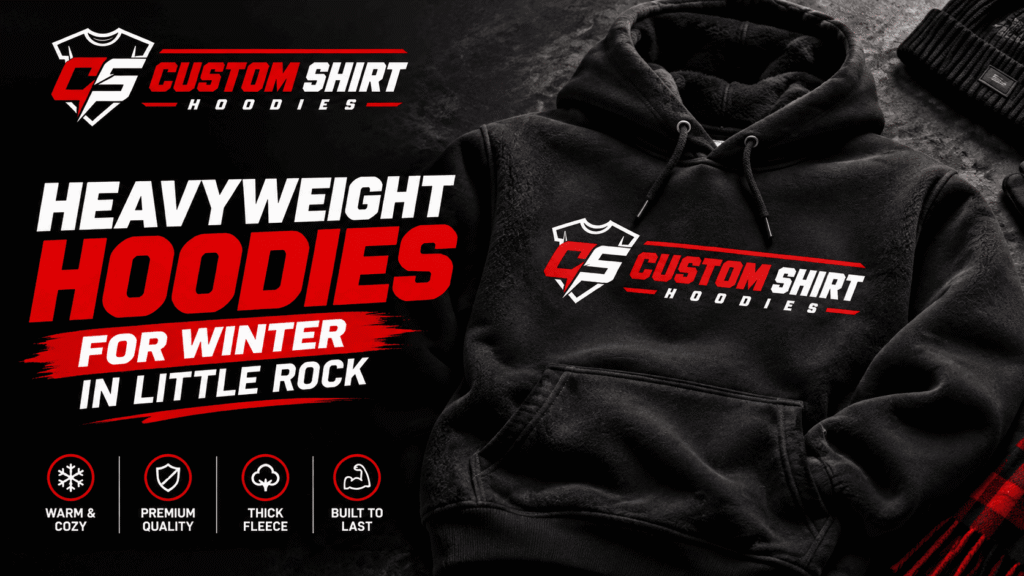
A heavyweight hoodie gets its warmth from one dense layer of fabric. The whole hoodie, front and back, is made from thicker material, which is measured using standard fabric weight testing methods that the textile industry uses to classify garments by grams per square meter.
A fleece lined hoodie works differently. The shell is usually made from a standard or midweight fabric, and the warmth is provided by a separate lining that is sewn inside. This construction tends to feel warmer directly against the skin, since that lining is soft and sits closest to the body. Heavyweight fabric, on the other hand, usually holds up a bit better against wind since there’s more density throughout the entire garment, not just on the inside.
Neither one is strictly better. It comes down to what the hoodie needs to do and how it will be worn.
Does Little Rock Get Cold Enough for This
Little Rock’s winters aren’t extreme, but they’re not mild either. Temperatures commonly sit in the 30s and 40s Fahrenheit during December and January, with occasional dips lower during cold fronts. The National Weather Service’s Little Rock forecast office tracks these patterns regularly, and it’s common to see a stretch of raw, damp cold that feels colder than the number on the thermometer suggests.
That’s the range where fleece lined hoodies do their best work. They’re not built to replace a heavy winter coat, but for morning commutes, outdoor events, church gatherings, or standing around at a game, the added lining makes a noticeable difference over a plain hoodie. Layered under a jacket on the coldest days, they hold up just fine.
Cotton Fleece vs. Sherpa Lining
Two linings show up most often in custom orders: cotton fleece and sherpa.
Cotton fleece lining is soft, lightweight, and breathes reasonably well. This is a popular choice for hoodies you want to wear inside and outside without it feeling too heavy or stiff.
Custom hoodies lined with Sherpa are constructed from a denser, plusher fabric resembling shearling. Sherpa traps more heat and feels noticeably plusher, making it a popular choice for hoodies made for cold weather, not year-round use. The tradeoff is that sherpa adds more bulk, so the hoodie sits heavier and can feel less flexible than a cotton fleece lined option.
Neither lining is wrong for a given order. Groups looking for something that still feels light day to day tend to lean toward cotton fleece, while anyone prioritizing maximum warmth for actual cold-weather wear often prefers sherpa.
Custom Printing on Fleece Lined Hoodies
Because the outer shell of a fleece lined hoodie stays smooth, it takes decoration about the same way a standard hoodie would. Screen printing, embroidery, and DTF transfers all work fine on the outer fabric without the lining getting in the way.
This is part of why fleece lined and heavyweight options both show up regularly in orders for custom hoodies built for winter events, church groups, and staff apparel. Businesses printing logos on custom sweatshirts or hooded pieces often care as much about how the print will hold up over a season of wear as they do about the initial look, and a smooth outer shell over a fleece lining gives them both.
Groups ordering custom church hoodies for winter retreats or youth events frequently choose fleece lined options for exactly this reason. The design stays sharp on the outside while the inside actually keeps people warm through an outdoor service or overnight trip.
Bulk Orders for Winter Apparel
Fleece lined hoodies come up often in bulk conversations heading into the colder months. Teams, schools, and companies planning winter uniforms or staff gear tend to ask about this option specifically because it balances comfort with practicality across a group of different body types and activity levels.
Bulk orders on fleece lined hoodies work well for organizations that need consistent sizing and a design that reads clearly on a hoodie that people will actually keep wearing once the weather turns. The American Apparel and Footwear Association publishes general guidance on apparel standards and sizing that many suppliers reference when producing consistent bulk runs, which matters when a group needs uniform sizing across a large order.
Caring for a Fleece Lined Hoodie
Some pilling on the inner lining is normal after repeated washing. It doesn’t affect warmth or how the hoodie holds up structurally, but it’s worth knowing ahead of time so it doesn’t come as a surprise.
Washing inside out helps protect both the print on the outside and the fleece lining itself. Cold water and low heat drying, or air drying when possible, will keep the lining soft longer and reduce shrinkage. High heat is usually what causes both prints and linings to break down faster than they should.
Getting Fleece Lined Hoodies Made Locally
Ordering locally means being able to feel the actual lining before committing to a bulk order, rather than guessing based on a product description. It also means shorter turnaround for approvals and the ability to compare cotton fleece against sherpa side by side before deciding which one fits the order.
For anyone near Park Plaza Shopping Center in Little Rock working on winter apparel, seeing the fabric and finished print in person before the full run goes into production tends to save time and avoid surprises later.
Frequently Asked Questions
What does “fleece lined” mean for a hoodie?
A fleece lined hoodie has a soft, brushed fabric layer sewn into the inside of the garment, usually cotton fleece or sherpa. This inner layer traps warmth against the body while the outer shell stays smooth for printing or embroidery.
How is a fleece lined hoodie different from a regular heavyweight hoodie?
A heavyweight hoodie gets its warmth from a denser single layer of fabric, while a fleece lined hoodie adds a separate soft layer inside a standard or midweight shell. Fleece lining tends to feel warmer against the skin, while heavyweight fabric holds up better in wind.
Is fleece lining warm enough for Little Rock’s cold snaps?
Yes. Little Rock winters mostly are in the 30s and 40s Fahrenheit, and fleece-lined hoodies work out fine in that range, especially stacked under a coat in the cold snaps.
Can fleece lined hoodies still be customized with logos or designs?
Yes. A fleece lined hoodie’s outer shell is typically a smooth cotton or cotton-poly blend that accepts screen printing, embroidery or DTF transfers just as well as a standard hoodie.
Do fleece lined hoodies pill or wear out faster than regular hoodies?
You may notice some pilling on the inner fleece after repeated washings but it will not affect the warmth or durability. To extend the lining’s lifespan, wash inside out and refrain from drying at high heat.
Good bulk orders fleece lined hoodies?
Many teams, schools and companies in the Little Rock area order fleece lined hoodies for winter uniforms, staff apparel or seasonal fundraisers where warmth and branding count.
Are fleece lined hoodies heavier or bulkier than standard hoodies?
They are a little bit thicker due to the extra inner layer but most fleece lined hoodies are supposed to be comfortable and not too stiff so they still layer well under jackets.
How should fleece lined hoodies be washed to protect the lining?
To keep the fleece lining soft and to help prevent it from shrinking too much over time, wash it in cold water, inside out, and dry on low heat (or air dry).